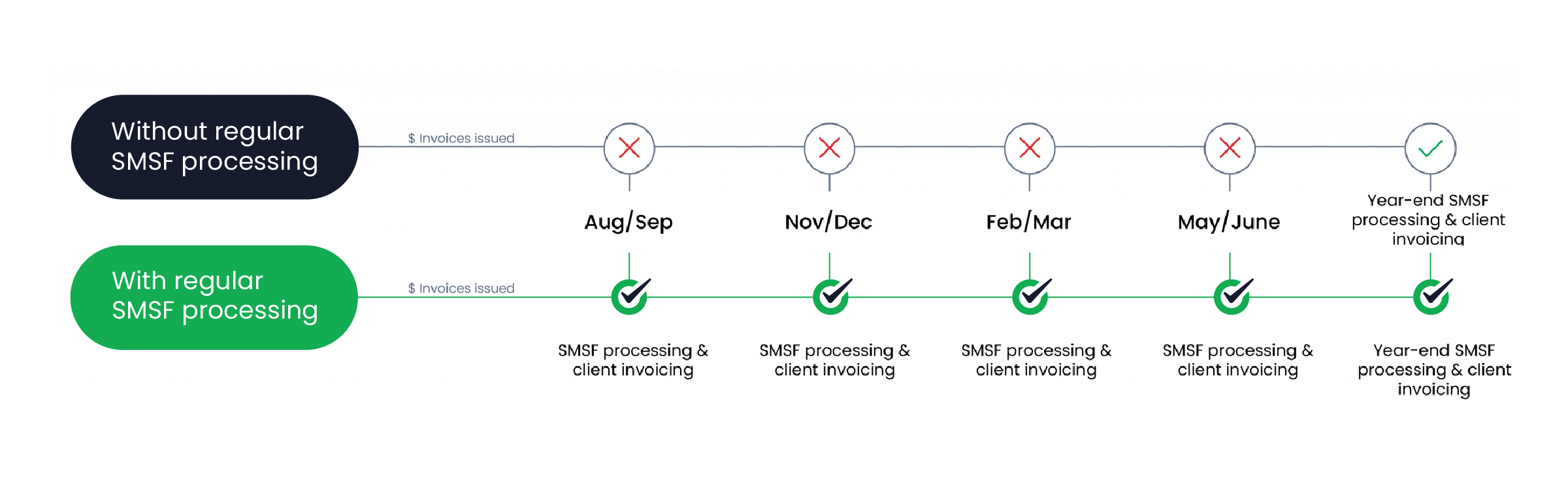
Traditionally, SMSF administration has been treated as a reactive, annual compliance event. For many firms, this results in the familiar “June 30 hangover”; months of compressed workload, stressed staff, and revenue that is locked up in WIP until the job is finally billed.
While this model is familiar, it is operationally inefficient. It creates cash flow volatility and limits your firm’s capacity to scale.
The industry is shifting. By moving to Regular SMSF Processing, forward-thinking firms are transforming SMSF administration from a seasonal burden into a stable, high-value annuity stream.
What is Regular SMSF Processing?
Regular SMSF processing is the strategic shift from annual “shoe-box” data entry to a continuous workflow. It involves reconciling transactions and processing data on a monthly or quarterly cycle, alongside interim reporting.
It does not increase the overall workload; instead, it redistributes that work evenly across the year. When approached strategically, regular processing should not be seen as a burden, but as a reliable, recurring revenue stream that supports predictable cash flow and better capacity utilisation.
The Commercial Impact: Annual vs. Regular Processing
The difference isn’t just operational; it is financial. Here is how the two models compare on key commercial metrics:
The Strategic Benefits of Regular SMSF Administration
Periodic SMSF processing offers numerous benefits in addition to the predictable revenue stream spread throughout the year. Some of the advantages of regular transaction processing include:
- Unlocking Cash Flow & Valuation: Regular SMSF processing enables practices to move away from one-off annual invoices and adopt fixed monthly or quarterly billing. This creates predictable revenue, improves cash flow, and supports a more stable financial position. More importantly, it shifts SMSFs from “compliance jobs” to annuity-style income streams.
- Scalability Without Burnout: Regular processing also ensures better utilisation of resources throughout the year. This drastically reduces staff burden at the end of the year and enables better forecasting of staffing needs. Additionally, there is less reliance on seasonal or contract hires and lower overtime costs during peak months.
- Elevating the Client Experience: Regular SMSF processing delivers ongoing value to clients by providing clearer, up-to-date visibility of their fund’s position throughout the year. Issues are identified and addressed earlier, year-end outcomes become more predictable, and clients experience fewer surprises. This proactive approach positions the firm as a trusted, year-round partner rather than a once-a-year compliance provider.
- Audit Efficiency as a Standard: When SMSFs are processed regularly, auditors receive cleaner and reconciled data, resulting in fewer queries and resubmissions. Regular SMSF processing leads to shorter audit turnaround times.
Is Regular SMSF Processing Mandatory for AU Firms?
Regular SMSF processing is not mandated by the ATO. However, the trustees must maintain accurate records. Only processing and invoicing annually leads to risk accumulation at the end of the year, causing hurried corrections, increased error rates, and avoidable delays during year-end compliance and audit.
Regular processing is not just a workflow preference; it is a risk management strategy. It ensures that when the audit rolls around, the fund is compliant by design.
Why Regular Processing Scales Better with Outsourcing
Implementing a monthly SMSF processing cycle requires discipline and consistent capacity; resources that are often scarce in busy firms. This is where SMSF outsourcing becomes a strategic lever.
Regular processing is process-driven and repeatable, making it the perfect candidate for a specialised offshore team like SuperRecords.
- Consistency: Offshore teams are not distracted by local ad-hoc advisory work; their sole focus is maintaining the ledger currency.
- Scalability: You can add volume to your books without needing to recruit and train new local staff.
- Profitability: By leveraging SuperRecords’ infrastructure, you lower the cost of production, improving the margin on your fixed-fee packages.
Is your firm ready to smooth out the seasonal spikes and build a more valuable SMSF book?
How to Transition from Annual to Regular SMSF Processing
Moving from annual to regular processing does not require an immediate overhaul. Firms can transition in stages, starting with the areas where more frequent processing can deliver the greatest operational value.
- Segment your SMSF book. Start with your highest-value or most complex funds, particularly those where annual processing creates the greatest year-end pressure, rather than converting the entire SMSF book at once.
- Set a processing cadence. Choose monthly or quarterly reconciliation based on fund complexity and client expectations, then build it into your workflow calendar rather than treating it as an add-on task.
- Move to periodic billing. Shift from a single annual invoice to fixed monthly or quarterly fees aligned with the new processing cycle. This helps turn a workflow change into a more predictable revenue model.
Specialist outsourced support can also help firms manage the transition while maintaining existing internal workloads and establishing a consistent processing cadence.
Choosing the Right Billing Model for Regular SMSF Processing
Regular processing delivers greater revenue predictability when the billing model is aligned with the new processing cadence. Two models are most common:
Fixed monthly/quarterly fee: Provides predictable billing for both the firm and client, while making recurring processing costs easier to plan and manage.
Tiered fee by fund complexity: Useful where fund complexity varies significantly across your book; simple accumulation funds cost less to process than funds with multiple pension accounts or property holdings.
Whichever model you choose, fees should align with the processing cadence rather than the previous annual billing cycle. Otherwise, firms may take on more frequent processing while retaining an annual billing structure, limiting the intended cash flow benefit.
Software That Supports Regular SMSF Processing
Regular processing is generally easier to manage with platforms that support ongoing reconciliation, reporting, and workflow visibility rather than relying primarily on annual batch processing. BGL 360, Class Super, and SuperMate are the most widely used platforms among Australian SMSF administrators, each supporting real-time reconciliation, interim reporting, and integration with outsourced processing teams, making the shift to a monthly or quarterly cycle straightforward regardless of which platform your firm already uses.
Frequently Asked Questions